Collection
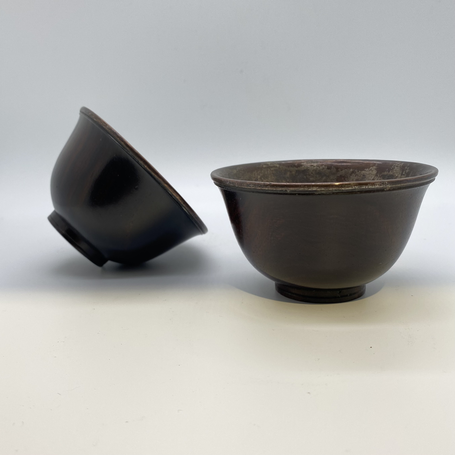
A pair of wine cups. Made of beautiful Zitan wood with silvered copper lining.
China 18c.
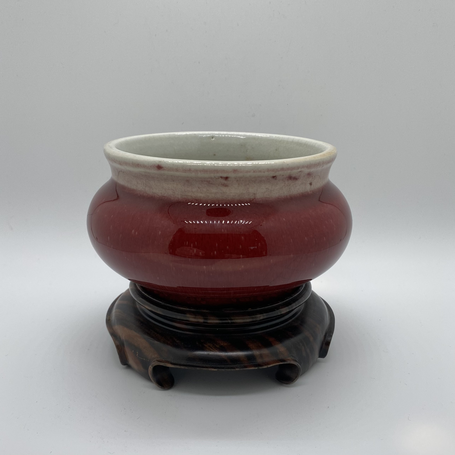
A Langyao censer.
The deep bright red glaze featuring crackles and pooling around the foot. The interior and bottom in a greenish -white crackled glaze, The Langyao glaze was developed under the reign of Kangxi, under the supervision of Lang Tingji,
China.
Kangxi 1662-1722 .
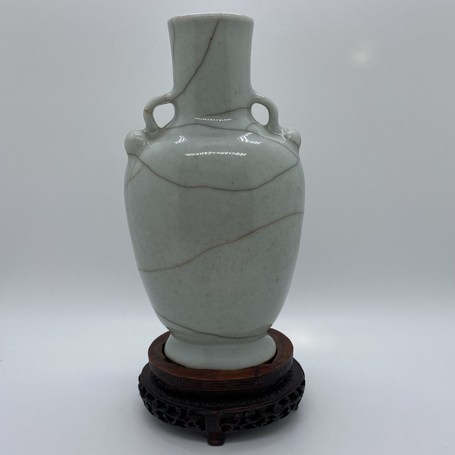
A Guan-type vase with a large crackle flanged with ruyi- shaped handles resting on the vase's shoulder. Originated in the Sung dynasty this particular glaze was very much admired by the Yongzheng and Qianlong emperor who ordered many pieces for their collection with copies of Sung glazes.
China 18c.

A Ge- type Hu shaped vase with a gold and iron thread crackle (Jinsi tiexian) ,
Originated in the Sung dynasty this particular glaze was very much admired by the Yongzheng and Qianlong emperor who ordered many pieces for their collection with copies of Sung glazes.
China 18c.
John Sparks label,,
prov. A dutch private collection
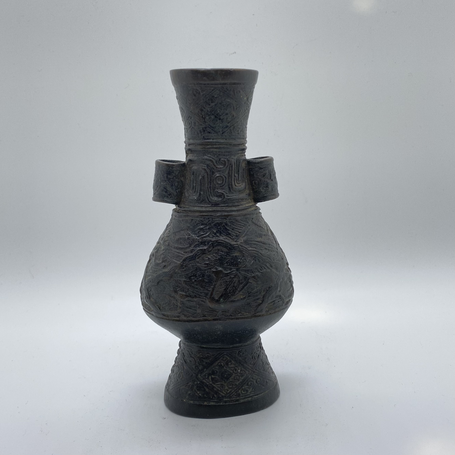
A small bronze vase 'Tou Hu". Cast with geometric patterns and birds.
A similar example is published in 'Later Chinese Bronzes" by Rose Kerr.
China , Yuan dynasty.
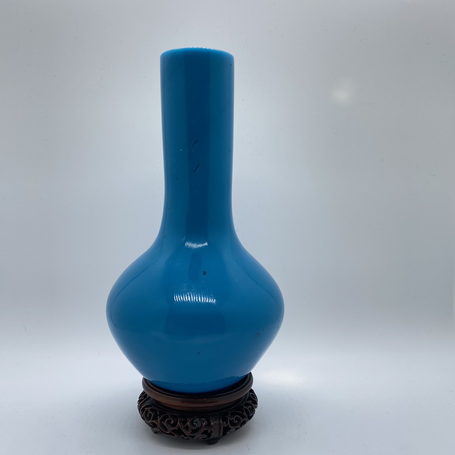
A Beijing glass vase. Executed in a very attractive turquoise blue colour, this blown vase with a Qianlong mark and of the period.
Qianlong 1736-1795

A jade mythical beast. The pale celadon jade with darker inclusions carved into a an animal looking backwards with his backbone well exposed.
China , Yuan-Ming dynasty.

A bronze incense burner.
Robustly cast with a compressed globular body with a slightly flared mouth rim supported on a splayed foot.The bronze of a warm brown colour. The body flanged by a pair of lion mask loop handles.
Compare with lot 3382 of the collection of later Chinese bronzes of the U. Hausmann collection.
China, 17-18 C.

A blue and white seal-paste box painted in a rich cobalt blue depicting The hundred antiquities (Bo Gu),
Kangxi , 1662-1722
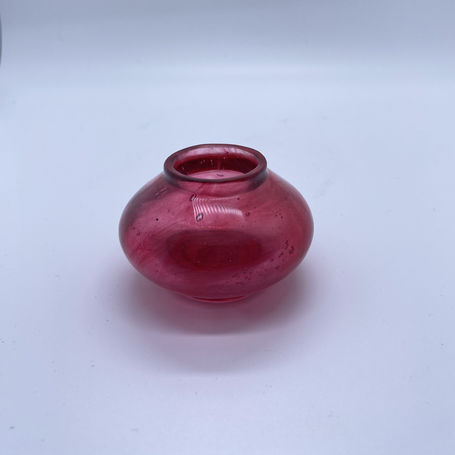
A small ruby red waterpot. Made of blown Beijing glass (Liuli) suffused with tiny air bubbles.
Qianlong reign mark and possibly of the period.
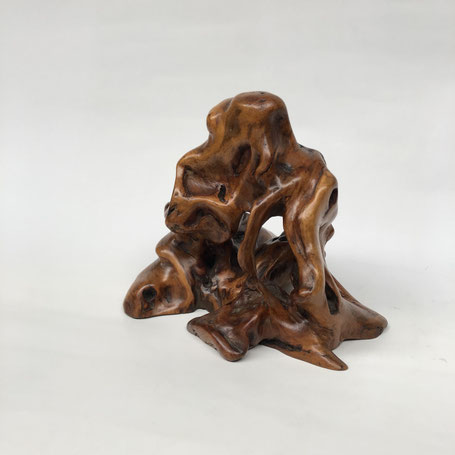
A boxwood carved scholar's rock,
Executed as a piece of root wood this object would have been placed in the Scholar's studio.
This object can also be used as an incense stick holder .
China 18-19 c
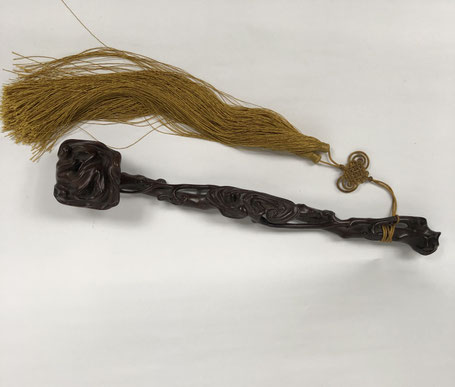
A boxwood Ruyi scepter beautifully carved as a branche grown with Ganoderma (Lingzhi) which symbolizes Longevity,
The Chinese term Ruyi means 'As you wish".
The ruyi was often given as a present because of the good wishes it implies,
China, 18c
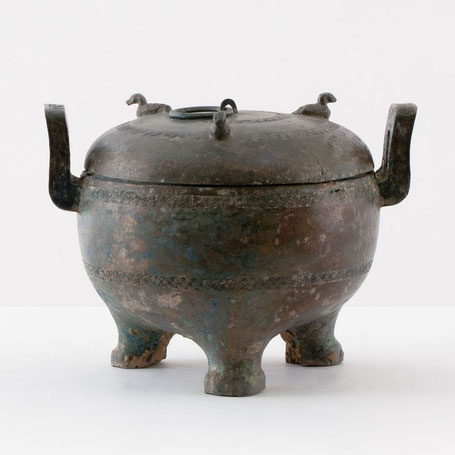
A bronze archaic vessel Liding. Its deep bowl with two U-shaped handles and bands of twisted rope patterns is crowned by a domed lid with three bird shaped ornaments, completed with a central ring-handle.
Late Spring and autumn -Warring states.
prov. Axel Vervoort
Private collection in Belgium
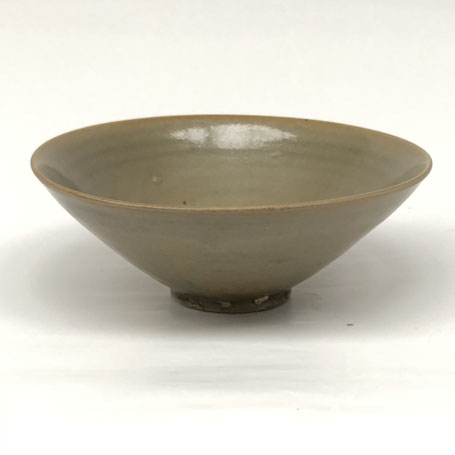
A yaozhou bowl, shaped in a conical form and covered with an attractive olive green glaze,
Northern Sung dynasty (960-1127 ).
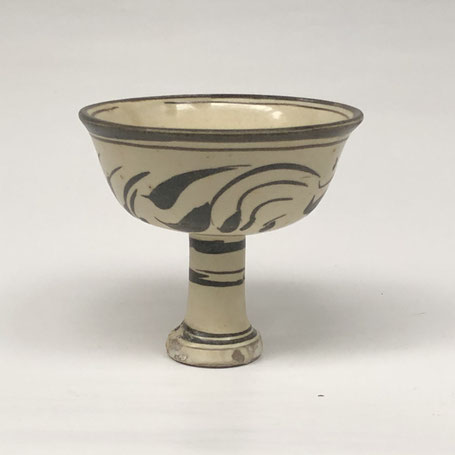
A nice stemcup painted in black showing the freely placed brushstrokes of the skilled painter.
Cizhou ware,
Yuan dynasty.
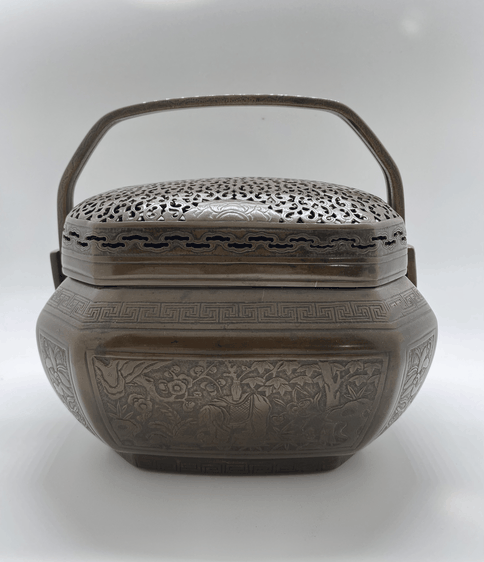
A copper handwarmer with a pierced cover. The sides are decorated in repose with an elephant carrying a vase on its back forming the rebus: Taiping youxiang" which stands for 'Peace and Prosperity.'
China, 18c
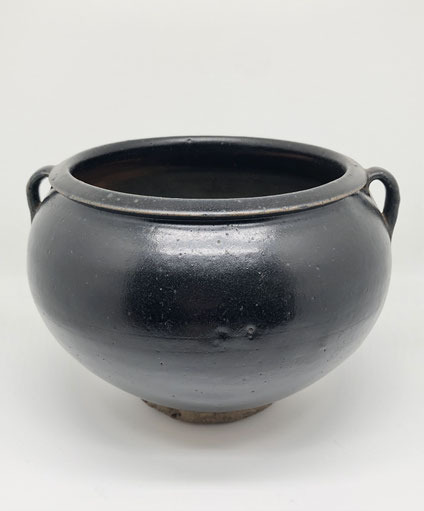
Black glazed jar with two handles, Northern black ware of Cizhou type, The black glaze neatly stopping above the well trimmed footing and revealing the buff coloured body.
Jin dynasty 13-14th c
prov. a Belgian private collection
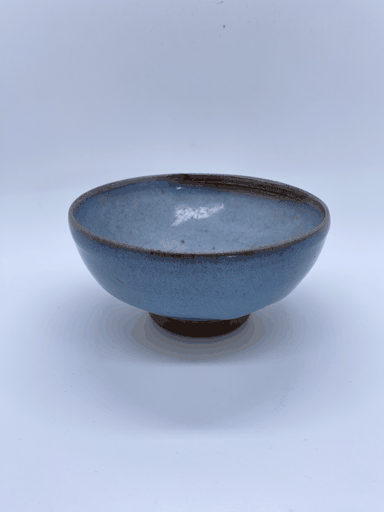
A Junyao bowl with an attractive lavender-blue glaze.The bowl potted with a gently curving wall to an upright rim in mushroom colour.
China Yuan-Ming dynasty.

A pear shaped bronze vase flanked by a pair of loop handles in the form of dragons. The body decorated with cicada-lappets with archaistic floral designs.
China ,Yuan-Ming dynasty.